
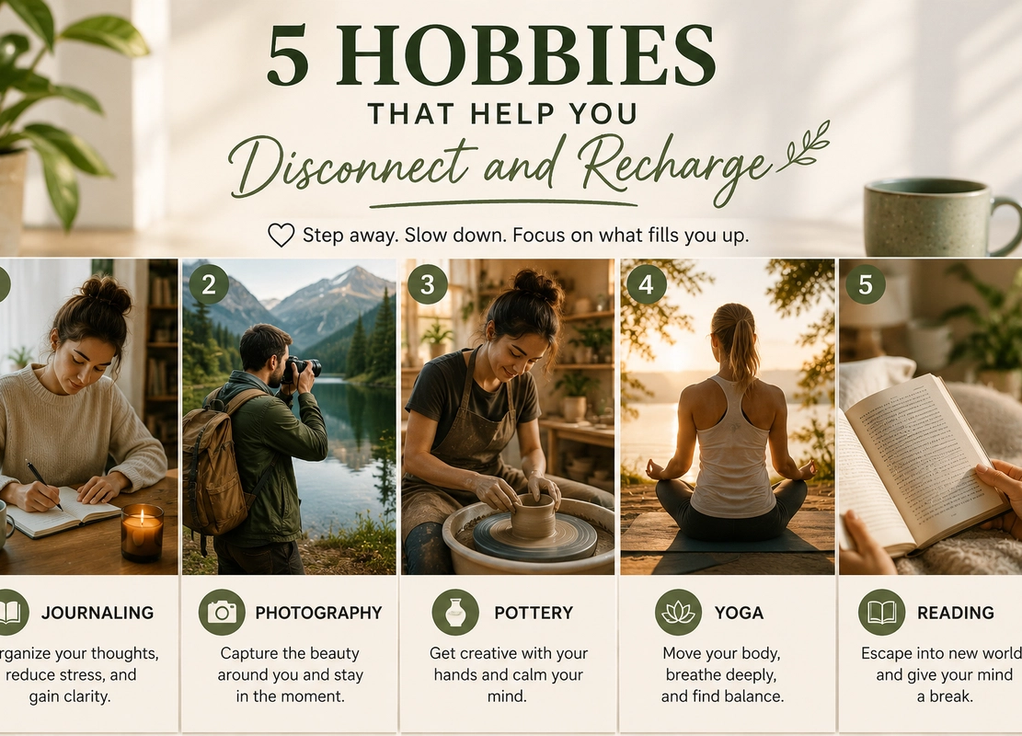
5 Hobbies That Help You Disconnect and Recharge
Sarah Lee
May 27, 2026
Modern life rarely gives people much time to slow down mentally.
Between work, notifications, social media, responsibilities, and constant digital stimulation, many people finish the day feeling emotionally exhausted without fully understanding why. Even free time often becomes filled with screen scrolling, multitasking, or passive entertainment that does not truly help the mind recover.
This is one reason hobbies have become increasingly important for mental well-being.
The right hobbies can help people disconnect from stress, improve focus, reduce anxiety, and create healthier balance in daily life. More importantly, they offer moments where attention shifts away from pressure and toward enjoyment, creativity, or calm.
Key Takeaways
- Hobbies can reduce stress and improve mental well-being
- Activities that require focus often help quiet mental overload
- Disconnecting from screens can improve emotional balance
- Relaxing hobbies help people recharge mentally and physically
- Consistent downtime is important for long-term health and productivity
1. Reading Helps Slow Down Mental Noise
Reading remains one of the most effective ways to mentally disconnect from daily stress.
Unlike endless scrolling or short-form content, books encourage sustained attention and deeper focus. Whether reading fiction, history, self-development, or poetry, many people find that reading helps calm the mind and reduce overstimulation from constant digital input.
Reading also creates quiet moments that feel increasingly rare in modern life.
Even spending twenty or thirty minutes with a book before bed or during a break can help people feel more relaxed, focused, and mentally refreshed.
2. Walking Creates Space to Think Clearly
Walking may seem simple, but it can have a surprisingly powerful effect on mental well-being.
Many people spend most of their days indoors, sitting in front of screens or moving quickly between responsibilities without real pauses. Walking, especially outdoors, helps slow the nervous system and creates space for reflection and mental clarity.
It also provides gentle physical movement without the pressure of intense exercise.
Whether walking through a city, park, or quiet neighborhood, the combination of movement, fresh air, and reduced digital stimulation often helps people feel calmer and more emotionally balanced.
3. Creative Hobbies Reduce Stress
Creative hobbies help shift attention away from productivity and toward expression or enjoyment.
Activities like painting, photography, writing, knitting, cooking, or playing music encourage people to focus on the process itself rather than constant performance or pressure. This can create a strong sense of mental relief, especially for people whose work involves heavy stress or digital overload.
Creativity also gives the brain a different kind of stimulation than passive screen consumption.
Many people find that creative hobbies help them feel more emotionally recharged because they involve active participation instead of endless information intake.
4. Gardening Encourages Patience and Calm
Gardening has become increasingly popular among people looking for slower and more grounding activities.
Caring for plants, spending time outdoors, and working with natural environments can feel deeply calming in a fast-paced digital world. Gardening also encourages patience because growth happens gradually rather than instantly.
Many people describe gardening as both physically relaxing and mentally restorative.
Even small indoor plants or balcony gardens can create a stronger sense of connection to nature and help reduce feelings of stress or overstimulation.
5. Learning Something Offline Can Feel Refreshing
In a world dominated by digital entertainment, offline learning hobbies can feel surprisingly restorative.
Activities like learning an instrument, baking, woodworking, pottery, or practicing a new language engage the mind without relying entirely on social media or constant internet consumption. These hobbies often improve concentration while giving people a sense of progress and personal fulfillment.
Unlike many online activities designed to capture attention endlessly, offline hobbies usually feel slower, more intentional, and mentally satisfying.
They allow people to focus fully on one activity instead of constantly switching between distractions.
Rest Is Becoming Increasingly Important
One reason hobbies matter more today is because many people struggle to truly rest.
Even during free time, the brain often remains overloaded with notifications, news, multitasking, and endless streams of content. Relaxing hobbies create opportunities for the mind to slow down instead of remaining in a constant state of stimulation.
This kind of intentional downtime can improve emotional resilience, focus, and overall mental health over time.
Disconnecting occasionally is not laziness — it is often necessary for recovery.
Hobbies Do Not Need to Be Productive
Many people avoid hobbies because they feel pressure to constantly optimize their time.
But hobbies do not always need to generate income, achievements, or measurable results to be valuable. Sometimes the purpose is simply enjoyment, relaxation, creativity, or mental escape from daily responsibilities.
Activities done purely for personal satisfaction can still provide enormous emotional and psychological benefits.
Not every moment of life needs to become productive to have meaning.
Small Breaks Often Make a Big Difference
People often imagine recharging requires long vacations or dramatic lifestyle changes.
In reality, small consistent moments of rest and enjoyment can significantly improve well-being over time. Even short periods spent reading, walking, gardening, or creating something can help reduce mental fatigue and emotional stress.
The goal is not to escape life completely, but to create healthier balance within it.
Disconnecting Sometimes Helps People Reconnect With Themselves
One of the biggest benefits of hobbies is that they create space away from constant noise and pressure.
They allow people to slow down, focus differently, and reconnect with parts of themselves that often get buried beneath stress, work, and digital distraction.
In a world that constantly demands attention, hobbies offer something increasingly valuable: the chance to pause, recharge, and simply exist without rushing all the time.