
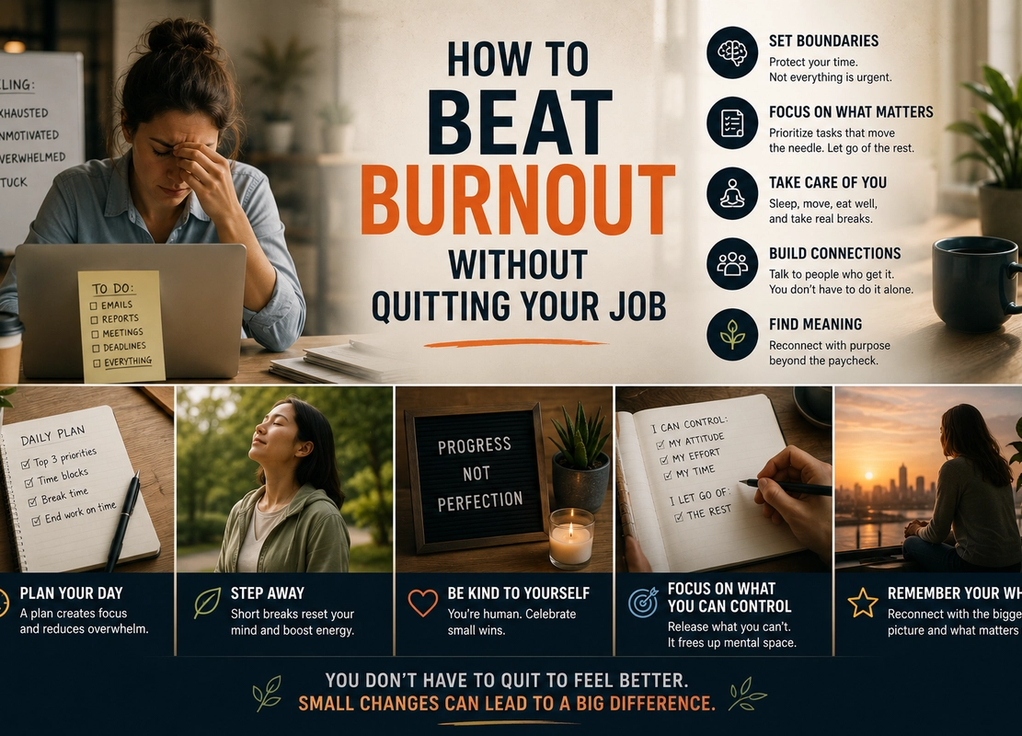
How to Beat Burnout Without Quitting Your Job
Sarah Lee
May 27, 2026
Burnout has become one of the defining problems of modern work culture.
Many people wake up already exhausted, struggle to focus throughout the day, and finish work feeling mentally drained even when they technically accomplished very little. Constant notifications, endless meetings, heavy workloads, and pressure to stay productive all the time can slowly wear people down without them fully realizing it at first.
For some, quitting feels like the only solution.
But in reality, many people cannot simply leave their jobs immediately because of financial responsibilities, career uncertainty, or personal obligations. The good news is that burnout is not always solved only through dramatic life changes. In many cases, smaller shifts in habits, boundaries, and mindset can significantly improve how work feels day to day.
Key Takeaways
- Burnout often builds gradually through chronic stress and exhaustion
- Small boundaries and routines can reduce mental overload
- Rest alone does not always fix workplace burnout completely
- Managing energy matters as much as managing time
- Recovery is usually about sustainability, not perfection
1. Stop Treating Every Task Like an Emergency
One major cause of burnout is living in constant urgency.
Many workplaces create environments where everything feels equally important and immediately demanding. Over time, constantly operating in “emergency mode” keeps the nervous system under continuous stress.
Learning to prioritize more realistically can reduce mental exhaustion significantly.
Not every email requires an instant reply, not every project deserves perfection, and not every workplace problem needs to become emotionally personal. Separating true urgency from artificial urgency helps create more mental breathing room throughout the day.
2. Protect Small Moments of Recovery
Many people wait for vacations or weekends to recover from stress.
But burnout often requires smaller daily recovery moments instead of relying only on occasional breaks. Short walks, quiet lunches away from screens, stretching, listening to music, stepping outside, or even a few minutes without notifications can help the brain reset throughout the day.
These moments may seem minor, but they matter more than people realize.
The nervous system recovers gradually through consistent pauses rather than nonstop stimulation followed by total exhaustion.
3. Create Stronger Boundaries Around Work
Modern technology made work feel endless.
Emails, Slack messages, and notifications now follow people long after office hours end, making it difficult for the brain to fully disconnect. One reason burnout became so common is because many employees never truly stop working mentally, even when physically at home.
Creating clearer boundaries can help reduce this constant pressure.
This may involve turning off notifications after work, avoiding emails late at night, protecting weekends more intentionally, or simply resisting the urge to remain constantly available all the time.
4. Focus on Energy, Not Just Productivity
Burnout is not always caused only by working too many hours.
Sometimes it comes from spending too much time on emotionally draining tasks, difficult environments, or constant multitasking without recovery. Managing personal energy becomes just as important as managing schedules.
Certain activities, conversations, or habits drain people faster than others.
Paying attention to what increases stress versus what restores focus can help people make healthier adjustments throughout the workweek instead of constantly pushing through exhaustion blindly.
5. Stop Romanticizing Overwork
Many people were taught to associate exhaustion with ambition.
Work culture often praises busyness, long hours, and constant availability as signs of dedication or success. But chronic stress eventually damages focus, creativity, motivation, and emotional well-being rather than improving them.
Rest is not laziness.
In reality, sustainable performance usually depends on recovery, balance, and mental clarity far more than nonstop overwork does. People often become more effective once they stop treating burnout as something to “power through.”
Burnout Is Often Emotional, Not Just Physical
One important thing many people misunderstand is that burnout involves more than feeling tired.
It often includes emotional numbness, cynicism, reduced motivation, irritability, difficulty concentrating, and feeling disconnected from work or life generally. This is why simply sleeping more does not always solve the problem completely.
Burnout usually develops slowly through prolonged emotional and psychological stress.
Recognizing the early signs matters because severe burnout becomes much harder to recover from later.
Workplaces Also Contribute to the Problem
Burnout is not always an individual failure.
Heavy workloads, unrealistic expectations, poor management, understaffing, lack of control, and unhealthy workplace cultures all contribute significantly to employee exhaustion. While personal habits help, some burnout originates from environments that are simply unsustainable long term.
This is why recovery sometimes also requires honest conversations about workload, priorities, and boundaries professionally.
People should not always blame themselves entirely for feeling overwhelmed in demanding systems.
Small Changes Often Matter More Than Dramatic Ones
When people feel burned out, they sometimes believe they must completely transform their lives immediately.
But drastic decisions made during exhaustion are not always the healthiest solutions. Often, smaller consistent adjustments create more sustainable improvement over time.
Better sleep, fewer notifications, healthier boundaries, realistic expectations, regular breaks, and moments of genuine recovery can gradually reduce stress more effectively than waiting for one dramatic escape.
Beating Burnout Is Usually About Sustainability
Most people cannot eliminate stress from life completely.
Work will still involve pressure, deadlines, responsibilities, and difficult days sometimes. The goal is not to create a perfectly stress-free life — it is to build routines and boundaries that make stress manageable without constant emotional depletion.
Burnout often happens when recovery never fully catches up with pressure.
And sometimes, the path toward feeling better begins not by quitting everything immediately, but by learning how to protect your energy before exhaustion becomes your normal state.