5 TV Shows That Were Canceled Too Soon
Sarah Lee
May 27, 2026
Few things frustrate television fans more than getting emotionally invested in a great show only to watch it disappear before its story feels complete.
Over the years, many critically acclaimed and deeply loved series were canceled long before audiences believed they had reached their full potential. Sometimes ratings were too low, sometimes networks changed direction, and other times streaming economics simply made continuation too expensive.
What makes these cancellations especially painful is that many of these shows later developed cult followings strong enough to prove they deserved far more time than they received.
Key Takeaways
- Many beloved TV shows ended because of business decisions rather than quality
- Low ratings do not always reflect long-term cultural impact
- Streaming and network politics often influence cancellations heavily
- Some canceled shows later became cult classics
- Fans still discuss unfinished stories years after cancellation
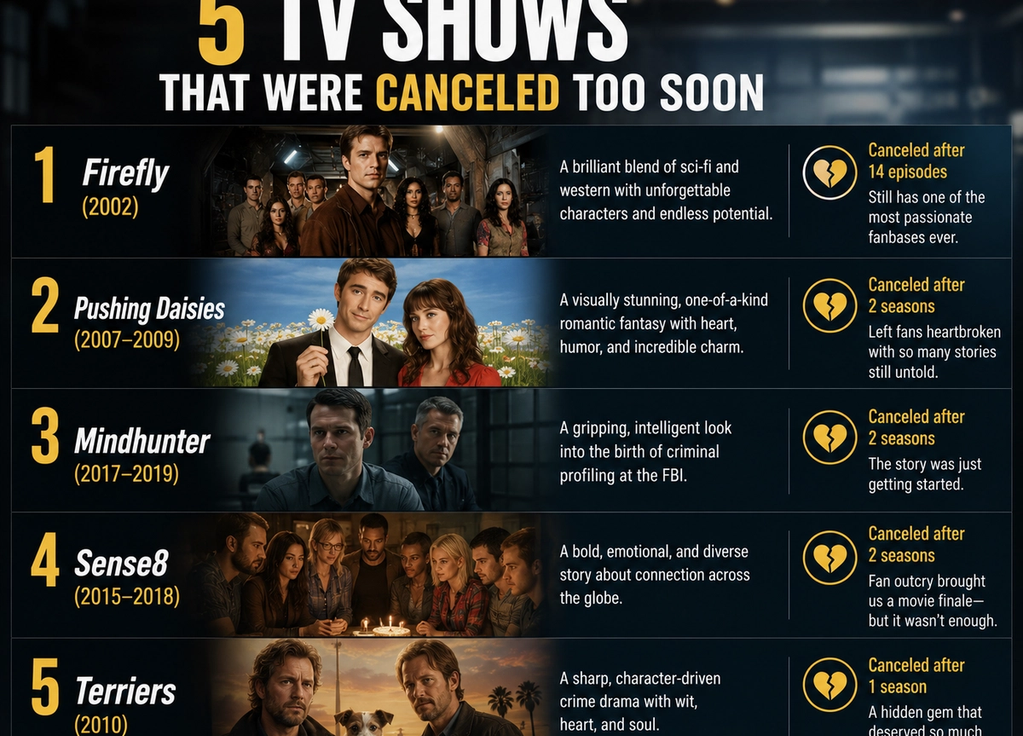
1. Firefly Became a Cult Legend After Cancellation
When Firefly premiered in 2002, it combined science fiction, western themes, humor, and strong character writing in a way that felt completely unique.
Despite positive reactions from viewers, the series struggled with poor scheduling decisions and inconsistent episode releases from the network. Fox canceled the show after only one season, leaving fans shocked by how quickly it disappeared.
Ironically, Firefly became far more popular after cancellation than during its original run.
The passionate fanbase eventually helped inspire the follow-up film Serenity, but many viewers still believe the series had the potential to become one of television’s greatest long-running sci-fi franchises if it had been given more time.
2. Mindhunter Ended Just as It Was Expanding
Netflix’s Mindhunter quickly gained a reputation as one of the smartest psychological crime dramas of the streaming era.
The show explored the early development of criminal profiling inside the FBI while focusing heavily on disturbing interviews with serial killers. Its slow pacing, sharp writing, and atmospheric style attracted a loyal audience and strong critical praise.
Yet despite its popularity, the series was placed on indefinite hold after only two seasons because of high production costs and the demanding nature of its filmmaking process.
Many fans felt especially frustrated because the story clearly seemed positioned to grow into something even larger, particularly involving future storylines surrounding infamous criminals like BTK.
3. Freaks and Geeks Became More Famous After It Ended
Today, Freaks and Geeks is often considered one of the greatest teen dramas ever made.
But when it originally aired in 1999, the show struggled to attract large audiences. Its realistic portrayal of adolescence differed sharply from the exaggerated teen dramas dominating television at the time.
NBC canceled the series after one season, even though critics strongly praised its writing and characters.
Over time, however, the show became hugely influential. It launched the careers of actors like James Franco, Seth Rogen, Jason Segel, and Linda Cardellini while developing a lasting reputation as one of television’s smartest portrayals of teenage life.
4. Santa Clarita Diet Left Fans Hanging Completely
Netflix’s Santa Clarita Diet mixed horror, comedy, and suburban satire in a way few shows attempted successfully.
Starring Drew Barrymore and Timothy Olyphant, the series followed a married couple navigating everyday suburban life after one of them suddenly becomes undead. The show gained praise for its humor, chemistry, and willingness to embrace absurdity fully.
Then Netflix canceled it abruptly after three seasons — immediately after a massive cliffhanger ending.
The unresolved finale became one of the biggest frustrations for fans, especially because the show still appeared creatively strong and had built a dedicated audience.
5. 1899 Disappeared Almost Immediately
The creators of Dark returned with enormous anticipation when Netflix released 1899, a mysterious multilingual sci-fi thriller involving passengers aboard a ship filled with strange psychological and technological mysteries.
The series attracted significant attention globally and quickly built a fanbase interested in its complex storytelling and ambitious atmosphere.
Yet Netflix canceled the show after only one season despite strong international interest.
Many viewers were especially disappointed because the creators had clearly planned a multi-season narrative, meaning huge portions of the mystery remained unexplored forever.
Great Shows Sometimes Fail for Business Reasons
One difficult reality of television is that quality alone does not guarantee survival.
Networks and streaming platforms make decisions based on budgets, ratings, subscriber growth, licensing costs, and viewing data rather than artistic potential alone. Some excellent shows simply fail to attract enough immediate attention to justify long-term investment financially.
This is partly why many canceled series later become cult classics.
Audiences often discover them slowly over time, long after executives already moved on.
Streaming Made Cancellations Feel More Common
The streaming era changed television dramatically.
Platforms release enormous amounts of content rapidly while constantly analyzing viewer data and engagement statistics. As competition increased, streaming services became more aggressive about canceling shows that fail to generate strong enough numbers quickly.
This created an environment where series often receive less time to build audiences organically compared to older network television.
Many viewers now hesitate to start new shows at all because they fear investing emotionally in stories that may never receive proper endings.
Some Canceled Shows Become More Influential Than Successful Ones
Interestingly, certain canceled series gain legendary status precisely because they ended early.
Fans continue discussing unfinished stories, imagining future seasons, and recommending these shows years later. Sometimes cancellation itself creates a kind of mythology around what “could have been.”
A short-lived show with passionate fans can remain culturally relevant far longer than many long-running series people eventually forget.
Television History Is Filled With Missed Opportunities
The history of television is full of shows that disappeared before reaching their full creative potential.
Some were canceled because they arrived too early, others because networks misunderstood them, and many because financial systems prioritized short-term numbers over long-term cultural impact.
But even when great shows end too soon, audiences rarely forget them completely.
And sometimes, the strongest proof a show deserved better is the fact that people still talk about it years after it disappeared.