The Real Reason So Many TV Shows Get Cancelled After Two Seasons
Sarah Lee
May 27, 2026
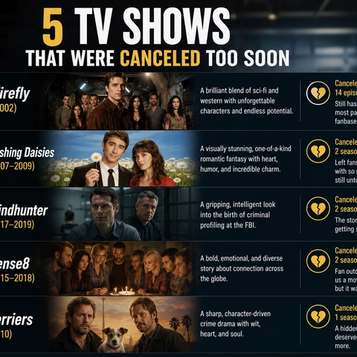
It often feels like audiences barely have time to get attached to a new TV show before it disappears.
Streaming platforms constantly release promising series with strong casts, impressive production quality, and loyal fanbases — only to cancel them after one or two seasons. For viewers, this has become increasingly frustrating, especially when unresolved storylines end abruptly without conclusions.
At first glance, these cancellations can seem confusing.
If people are watching the show, posting about it online, and giving it positive reviews, why would studios remove it so quickly? The answer usually has less to do with artistic quality and more to do with how the modern streaming industry actually operates.
Behind the scenes, TV success today is measured very differently than it was during the traditional cable era.
Key Takeaways
- Streaming platforms prioritize subscriber growth over long-term storytelling
- High production costs make many shows financially risky
- Algorithms and viewer data strongly influence cancellation decisions
- Second seasons are often more expensive than first seasons
- Modern streaming culture rewards constant novelty and new releases
1. Streaming Platforms Care Most About Subscriber Growth
In the past, television networks focused heavily on ratings and advertising revenue.
Streaming services operate differently. Platforms like Netflix, Disney+, Amazon Prime, and Max primarily care about attracting and retaining subscribers. A new show’s biggest value often comes from convincing people to sign up for the platform in the first place.
Once a series stops driving major subscriber growth, its value can decline quickly from a business perspective.
This means a critically acclaimed show with loyal fans may still get cancelled if executives believe it is no longer bringing enough new users into the platform ecosystem.
2. Shows Become More Expensive After Season One
One major reason many shows disappear after two seasons is cost.
First seasons are often relatively cheaper because actors, writers, and production teams sign lower initial contracts. But if a series becomes successful, salaries usually increase significantly in later seasons.
Production expectations also rise.
Studios may spend more on effects, marketing, locations, or larger episode counts as a show grows. For streaming companies already spending billions on content, these rising costs can quickly make long-term continuation less attractive financially.
Sometimes cancelling a moderately successful show simply becomes cheaper than renewing it.
3. Algorithms Now Help Decide What Survives
Modern streaming platforms collect enormous amounts of viewer data.
Companies analyze how quickly people finish shows, when they stop watching, whether they binge entire seasons, and how content influences subscriptions or cancellations. This data-driven approach means renewal decisions increasingly depend on algorithmic performance rather than cultural impact alone.
A show may have passionate fans online while still performing poorly according to internal platform metrics.
Executives now rely heavily on viewing patterns, engagement statistics, and completion rates to determine whether continuing a series makes financial sense.
4. Streaming Culture Rewards Constant Novelty
The streaming industry depends heavily on keeping audiences constantly interested.
New releases generate headlines, social media attention, trending discussions, and spikes in subscriptions more effectively than older ongoing series often do. As a result, platforms frequently prioritize launching fresh content over maintaining long-running shows.
This creates a culture where novelty becomes more valuable than stability.
Instead of building decade-long television franchises like older network TV often did, streaming services sometimes prefer rapidly cycling through new concepts designed to capture short-term attention.
5. Audiences Now Watch TV Differently
Viewer behavior changed dramatically in the streaming era.
People now consume enormous amounts of content across multiple platforms simultaneously. Attention is fragmented, competition is intense, and audiences move quickly between trending shows. Even highly popular series may struggle to maintain momentum long enough to justify rising production costs over many seasons.
Binge-watching also affects viewing patterns.
Many viewers wait until an entire season finishes before watching, while others abandon shows after a few episodes if something newer captures attention. This unpredictability makes long-term planning more difficult for studios.
Social Media Popularity Does Not Always Reflect Real Numbers
One common misunderstanding is assuming online discussion guarantees success.
A show may trend heavily on TikTok, X, or Reddit while still reaching a relatively small audience overall. Streaming platforms care less about visibility alone and more about measurable engagement tied directly to subscriptions and viewing hours.
Vocal online fanbases sometimes create the illusion of massive popularity even when actual viewing data tells a different story internally.
This disconnect partly explains why some culturally visible shows still get cancelled unexpectedly.
The Industry Became More Financially Aggressive
During the early streaming boom, companies spent aggressively to compete for dominance.
Platforms approved large numbers of experimental projects while prioritizing subscriber growth over immediate profitability. But as competition intensified and investor pressure increased, studios became more cautious about spending.
Now, many streaming companies focus more heavily on cutting costs and maximizing returns.
This shift made cancellations far more common, especially for mid-sized shows that are successful but not massive global hits.
Some Viewers Are Losing Trust in New Shows
Frequent cancellations are beginning to change audience behavior too.
Many people now hesitate to start new series because they fear the story will never be finished. This creates a frustrating cycle where viewers wait to see whether a show survives before investing time, while platforms expect strong early engagement to justify renewals.
Trust between audiences and streaming platforms has become weaker partly because of how often unfinished stories disappear abruptly.
People increasingly want reassurance that emotional investment in a series will actually lead somewhere.
TV Became More Disposable in the Streaming Era
The reason so many shows get cancelled after two seasons ultimately comes down to how streaming transformed entertainment economics.
Platforms prioritize subscriber growth, algorithms, constant novelty, and financial efficiency in ways traditional television never fully did. As a result, even good shows can disappear quickly if they fail to meet specific business goals behind the scenes.
Modern television now moves faster, feels more competitive, and often treats content as temporary rather than long-term cultural investment.
And for viewers, that can make getting attached to new stories feel increasingly risky.