5 Ways Technology Reshaped Communication
Laurie Lucas
May 27, 2026
Human communication has changed more in the past few decades than in almost any other period of history.
Messages that once took days or weeks to arrive now travel instantly across the world. Conversations happen in real time between people living on different continents. Businesses operate globally through virtual meetings, while friendships and relationships increasingly exist through digital platforms.
Technology did not simply improve communication — it completely transformed how humans connect, interact, share information, and build communities.
From smartphones and social media to video calls and AI-powered translation tools, digital innovation has reshaped nearly every aspect of modern communication.
The result is a world that feels more connected than ever before, while also introducing entirely new challenges around attention, privacy, and human interaction.
Key Takeaways
- Technology made communication faster and more accessible globally
- Social media transformed how people share information and interact
- Video communication changed work, education, and relationships
- Smartphones turned communication into a constant daily activity
- Digital communication created both stronger connectivity and new challenges
1. Instant Communication Became the Global Standard
One of the biggest ways technology reshaped communication is speed.
In the past, long-distance communication depended heavily on letters, landline calls, or physical travel. Today, messages move instantly through text messaging, email, and social media platforms.
People now expect immediate responses in both personal and professional settings.
A message sent from one side of the planet can arrive in seconds. Businesses communicate globally in real time, while families stay connected regardless of geographic distance.
This level of instant accessibility fundamentally changed social expectations.
Communication no longer feels limited by location or time zones in the same way it once was.
2. Social Media Changed Human Interaction
Social media platforms transformed communication from private conversations into highly public digital interaction.
People now share thoughts, opinions, photos, experiences, and daily activities continuously online.
Platforms like Instagram, TikTok, X, Facebook, and LinkedIn reshaped how individuals:
build identities, consume news, form communities, promote businesses, and maintain relationships.
Communication became more visual, faster-moving, and heavily influenced by algorithms.
For many people, social media is now one of the primary ways they experience current events, entertainment, and social connection.
At the same time, these platforms introduced challenges involving misinformation, online polarization, digital addiction, and reduced attention spans.
Technology expanded communication opportunities while also changing the emotional and psychological dynamics of interaction itself.
3. Video Calls Redefined Remote Connection
Video communication became one of the most transformative technologies of the modern era.
Platforms like Zoom, Microsoft Teams, FaceTime, and Google Meet made face-to-face interaction possible from almost anywhere.
This dramatically reshaped:
remote work, online education, international business, healthcare consultations, and long-distance relationships.
The COVID-19 pandemic accelerated this transformation even further, pushing millions of people into virtual communication environments almost overnight.
Video calls helped preserve human interaction during physical isolation and permanently changed workplace culture in many industries.
Today, many companies operate with fully remote or hybrid teams because technology made digital collaboration practical on a massive scale.
4. Smartphones Turned Communication Into a Constant Activity
Before smartphones, communication was more limited and intentional.
Now, billions of people carry permanently connected communication devices in their pockets every day.
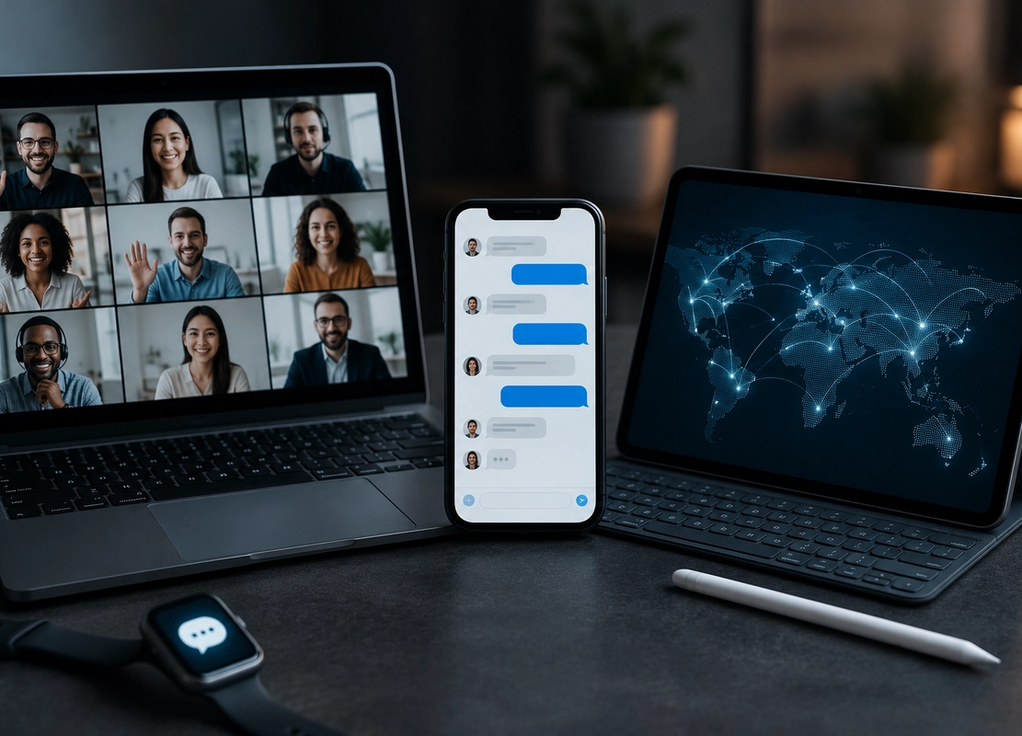
Smartphones combine messaging, calling, video, social media, email, cameras, and internet access into one device.
As a result, communication became continuous.
People now interact throughout the day through notifications, group chats, voice messages, comments, and live updates.
This constant connectivity changed social behavior dramatically.
Many people feel pressure to remain available at all times, while work and personal life increasingly overlap through digital communication channels.
Technology eliminated many barriers to connection, but it also reduced opportunities for disconnection and privacy.
5. Translation Technology Expanded Global Communication
Language barriers became far less restrictive thanks to modern translation technology.
AI-powered translation tools now allow people from different linguistic backgrounds to communicate more easily through text, voice, and even live video.
Applications like Google Translate and real-time AI translation systems support international business, tourism, education, and collaboration on an unprecedented scale.
Technology has made global communication far more accessible for millions of people.
While automated translation is not perfect, it continues improving rapidly through advances in artificial intelligence and machine learning.
This progress is helping create a more interconnected global society where communication increasingly transcends geography and language.
Communication Became More Visual Than Ever
Modern communication relies heavily on images, videos, emojis, GIFs, and short-form content.
People increasingly communicate emotions, reactions, and ideas visually rather than through long written messages alone.
Platforms built around visual storytelling transformed how users capture attention online.
Short videos, memes, and visual branding now shape digital culture across nearly every industry.
Technology changed not only how fast humans communicate, but also the formats people prefer to use.
Information Now Spreads at Unprecedented Speed
Technology dramatically accelerated the spread of information.
News, trends, viral content, and global events can reach millions of people within minutes.
This creates both opportunities and risks.
Important information spreads faster during emergencies, social movements gain momentum quickly, and global awareness increases rapidly.
At the same time, misinformation and manipulated content also travel faster than ever before.
The speed of digital communication has made information ecosystems more powerful — and more difficult to control.
Digital Communication Changed Human Attention
One major consequence of modern communication technology is the fragmentation of attention.
People now navigate constant notifications, messages, updates, and digital distractions throughout the day.
Communication became shorter, faster, and more immediate.
Many conversations now happen through brief texts, reaction icons, or short videos instead of long discussions.
While technology increased connectivity, it also changed how deeply people engage with information and each other.
Some experts argue that digital communication strengthened convenience while weakening sustained focus and face-to-face interaction.
Technology Continues Redefining Human Connection
Communication technology continues evolving rapidly through artificial intelligence, augmented reality, wearable devices, and virtual environments.
Future communication may become even more immersive, automated, and globally integrated.
Already, AI systems can summarize conversations, translate languages in real time, and generate human-like responses instantly.
The line between physical and digital interaction continues becoming thinner every year.
Communication Will Never Be the Same Again
Technology permanently transformed human communication.
It made interaction faster, more global, more visual, and more accessible than any previous generation could have imagined.
At the same time, it introduced entirely new social, emotional, and cultural challenges that society is still learning to navigate.
Whether through smartphones, social media, video calls, or AI-driven tools, digital technology reshaped how humans connect with one another on a global scale.
And as innovation continues accelerating, communication itself will likely keep evolving in ways people cannot fully predict yet.