The Countries Winning the AI Race and What’s at Stake
Laurie Lucas
May 27, 2026
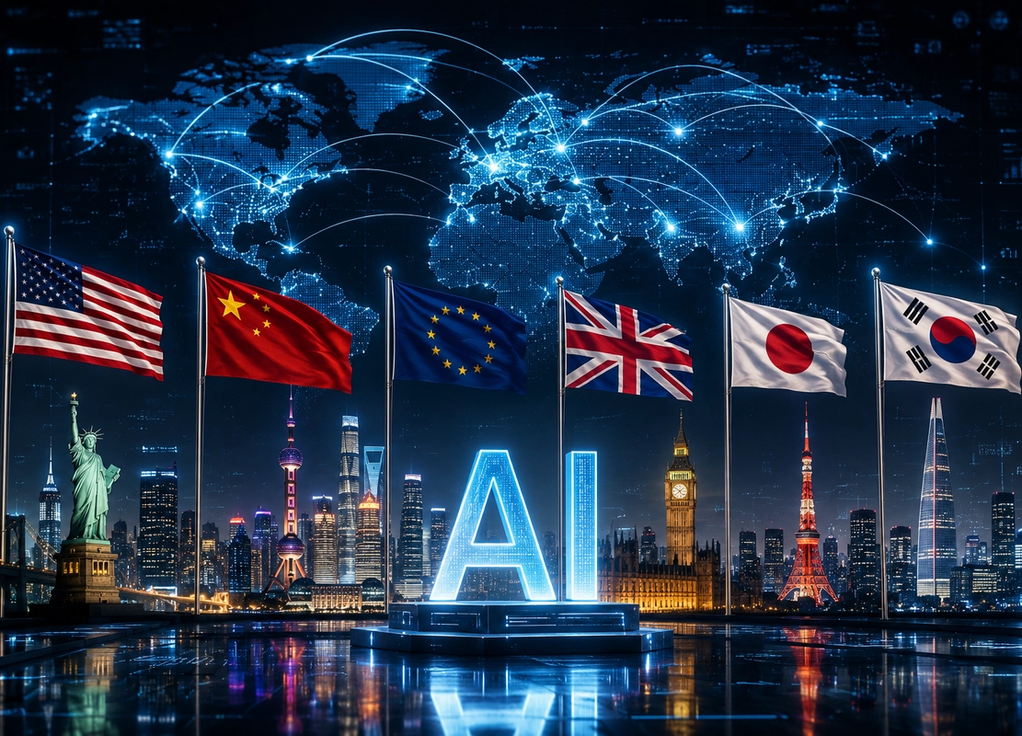
Artificial intelligence has become one of the most important technological competitions of the 21st century. Governments and corporations are investing billions into AI development because the technology is expected to shape everything from economic growth and military power to healthcare, education, cybersecurity, and global influence.
The race is no longer only about innovation. It is also about control over data, infrastructure, talent, semiconductor production, and the future balance of global power. Countries leading in AI may gain enormous strategic advantages, while those falling behind risk becoming increasingly dependent on foreign technology systems.
As AI capabilities continue accelerating, a handful of nations are emerging as the clear frontrunners in this rapidly evolving global competition.
Key Takeaways
- The United States and China currently dominate the global AI race
- AI leadership affects economic power, military strength, and global influence
- Access to talent, chips, data, and computing power is critical
- Smaller countries are competing through specialization and innovation
- The future of AI could reshape global politics and economic systems
1. The United States Still Leads in AI Innovation
The United States remains one of the strongest forces in artificial intelligence, largely because of its dominance in private-sector innovation. Major companies like OpenAI, Google, Microsoft, NVIDIA, Meta, and Amazon continue pushing the boundaries of AI research, cloud computing, and advanced semiconductor development.
American universities and research institutions also attract many of the world’s top AI researchers and engineers. Combined with massive venture capital investment and powerful tech ecosystems, the U.S. maintains a significant advantage in cutting-edge AI model development and commercial deployment. However, concerns about regulation, competition with China, and dependence on global supply chains continue shaping America’s long-term AI strategy.
2. China Is Expanding Aggressively
China has invested heavily in artificial intelligence as part of its long-term national strategy. The Chinese government views AI as critical for economic growth, technological independence, military modernization, and global competitiveness.
Unlike the United States, where private companies drive much of the innovation, China combines strong state support with major tech giants like Baidu, Alibaba, Tencent, and Huawei. The country also benefits from massive datasets generated by its large population and extensive digital infrastructure. Although export restrictions on advanced chips have created challenges, China continues accelerating domestic semiconductor production and AI development at remarkable speed.
3. Europe Focuses on Regulation and Ethical AI
Europe plays a different role in the AI race. While it has strong research institutions and innovative companies, the European Union has focused heavily on regulation, privacy protection, and ethical standards surrounding artificial intelligence.
The EU’s AI Act represents one of the world’s first major attempts to regulate AI systems comprehensively. European leaders argue that trustworthy and human-centered AI may become a competitive advantage in the future. However, critics worry that excessive regulation could slow innovation and leave Europe trailing behind the United States and China in commercial AI development.
4. Smaller Countries Are Competing Through Specialization
Several smaller nations are finding ways to compete by focusing on specific AI strengths rather than attempting to match the scale of larger powers. Countries like Singapore, South Korea, Israel, Canada, and the United Arab Emirates are investing heavily in AI talent, startup ecosystems, research hubs, and specialized industries.
Israel has become particularly influential in cybersecurity and defense-related AI innovation, while Singapore positions itself as a global smart-city and AI governance hub. Canada remains important because of its pioneering AI researchers and academic institutions. These countries demonstrate that influence in the AI race is not determined only by population size or military power.
5. Semiconductor Power Has Become Crucial
One of the most important battlegrounds in the AI race involves semiconductor manufacturing. Advanced AI systems require enormous computing power, and the companies producing high-end chips now hold extraordinary strategic importance.
Taiwan, through TSMC, plays a central role in global semiconductor production, making the island geopolitically critical. NVIDIA has also become one of the most influential companies in the world because its GPUs power many leading AI systems. Control over advanced chips increasingly shapes global alliances, trade restrictions, and national security strategies as countries compete for technological independence.
6. AI Is Becoming a National Security Issue
Artificial intelligence is no longer viewed only as a commercial technology. Governments increasingly see AI as a matter of national security because of its potential military and intelligence applications.
AI systems are already influencing cybersecurity, surveillance, autonomous weapons, battlefield analysis, and information warfare. Nations capable of developing advanced AI could gain significant strategic advantages in future conflicts and geopolitical competition. This is one reason governments are investing aggressively in AI infrastructure, research funding, and talent recruitment.
7. The Stakes Go Far Beyond Technology
The AI race is ultimately about far more than chatbots or productivity tools. Artificial intelligence could reshape labor markets, global economies, healthcare systems, scientific research, and political influence for decades to come.
Countries leading in AI may gain enormous economic advantages through automation, innovation, and control over future digital infrastructure. Meanwhile, countries falling behind risk technological dependence and reduced competitiveness in the global economy. The race for AI leadership may eventually influence global power structures as profoundly as the industrial revolution or the rise of the internet once did.
Talent Is Becoming One of the Most Valuable Resources
One of the biggest challenges in the AI race is securing enough highly skilled talent. Researchers, engineers, data scientists, and chip designers are now among the most sought-after professionals in the world.
Countries are competing aggressively to attract experts through immigration programs, research funding, startup incentives, and partnerships with universities. Some governments recognize that long-term AI leadership may depend as much on human capital as on computing infrastructure itself.
The Competition Is Accelerating Rapidly
The pace of AI development has increased dramatically over the past few years. Breakthroughs in generative AI, robotics, machine learning, and autonomous systems are happening faster than many governments originally expected.
As a result, countries are racing not only to innovate but also to establish regulations, secure supply chains, and shape international standards before rivals gain too much influence. The competition is becoming increasingly global, strategic, and politically sensitive.
The AI Race Could Redefine Global Power
Artificial intelligence may become one of the defining forces shaping the future international order. Nations leading in AI could influence global markets, military capabilities, scientific progress, and digital infrastructure on an unprecedented scale.
At the same time, rapid AI advancement also raises serious concerns involving privacy, misinformation, labor disruption, surveillance, and ethical governance. The countries winning the AI race will not only shape the future of technology — they may help determine how power itself is distributed in the decades ahead.