Will Robots Take Your Job? Here's What the Data Actually Says
Laurie Lucas
May 27, 2026
Artificial intelligence and automation are advancing faster than ever before. From self-checkout machines and warehouse robots to AI chatbots and image generators, technology is beginning to perform tasks that were once handled entirely by humans.
As these systems become more powerful, many people are asking the same question: will robots eventually take most jobs away?
The fear is understandable. Headlines often predict massive unemployment caused by automation, while viral videos of humanoid robots and AI tools make the future feel increasingly uncertain.
But the actual data tells a far more complicated story.
Technology has always changed the labor market. Some jobs disappear, others evolve, and entirely new industries emerge. While automation will certainly replace certain types of work, experts say it is unlikely to eliminate human employment altogether.
Instead, the future of work will probably involve major transformation rather than total replacement.
Key Takeaways
- Automation will replace some jobs but create new ones as well
- Repetitive tasks are most vulnerable to AI and robotics
- Human creativity, communication, and emotional intelligence remain valuable
- Many industries will experience job transformation instead of elimination
- Workers who adapt to technology will likely remain more competitive
1. Repetitive Jobs Face the Highest Risk
The data consistently shows that repetitive and predictable tasks are the most vulnerable to automation.
Machines and AI systems perform best when tasks follow clear patterns and rules. This includes jobs involving repetitive physical labor, routine calculations, data processing, or standardized workflows.
Industries like manufacturing, customer support, transportation, and basic administrative work are already seeing significant automation.
Factories increasingly rely on robotic systems for assembly lines. AI-powered chatbots handle millions of customer service requests every day. Self-checkout systems reduce the need for cashiers, while algorithms now perform tasks that once required teams of analysts.
However, automation usually targets specific tasks within jobs rather than eliminating entire professions immediately.
Many workers still perform responsibilities that machines struggle to replicate effectively.
2. Technology Has Always Changed Jobs
One important historical pattern often gets overlooked during discussions about automation.
Technology has disrupted jobs many times before.
The Industrial Revolution replaced large amounts of manual labor, but it also created entirely new industries and professions. Computers automated office work, yet they also generated millions of jobs in software, digital marketing, cybersecurity, and information technology.
The internet eliminated certain traditional businesses while creating entirely new global economies.
Experts believe AI and robotics may follow a similar pattern.
Some jobs will disappear, but new roles connected to AI management, robotics maintenance, digital systems, data analysis, and human-AI collaboration are already emerging rapidly.
The labor market rarely stays static after technological change.
3. Human Skills Still Matter Deeply
Despite impressive advances in AI, many human abilities remain extremely difficult to automate fully.
Creativity, emotional intelligence, leadership, negotiation, empathy, critical thinking, and complex decision-making continue to give humans a major advantage in many industries.
Jobs involving healthcare, education, therapy, management, social work, design, and relationship-building still rely heavily on human interaction.
AI can generate information quickly, but understanding emotional nuance, ethical complexity, and human trust remains far more difficult for machines.
Even highly advanced AI systems still depend heavily on human oversight, interpretation, and direction.
In many workplaces, technology is becoming a tool that supports employees rather than replacing them entirely.
4. AI Is More Likely to Transform Jobs Than Erase Them
Many experts now believe the biggest impact of AI will be job transformation rather than mass unemployment.
Instead of replacing entire professions overnight, automation often changes how work is performed.
For example, doctors increasingly use AI-assisted diagnostics, but human medical expertise remains essential. Lawyers use AI to analyze documents faster, while teachers integrate digital tools into education instead of disappearing entirely.
Workers across industries are beginning to collaborate with AI systems rather than compete directly against them.
This shift may actually increase productivity while allowing humans to focus more on strategic, creative, and interpersonal tasks.
The future workplace may involve humans and machines working together far more closely than many people expect.
5. Some Industries Will Change Faster Than Others
Automation will not affect every profession equally.
Industries heavily dependent on routine processes are likely to experience faster disruption. Transportation, logistics, retail, and administrative support may see major automation over the next decade.
Meanwhile, careers requiring human interaction, adaptability, and complex communication may remain more stable for longer periods.
Healthcare, skilled trades, education, mental health services, and creative industries still depend strongly on human capabilities that machines struggle to replicate consistently.
The pace of automation also depends on economics.
Even if robots can technically replace certain jobs, companies must still consider cost, regulation, reliability, and public acceptance before implementing large-scale automation.
6. New Technology Often Creates New Types of Work
One reason economists remain cautious about predicting mass unemployment is because new technologies frequently create jobs people could not previously imagine.
Few people predicted careers like:
social media manager, app developer, AI prompt engineer, cybersecurity analyst, YouTuber, or cloud architect decades ago.
As AI expands, entirely new professional categories will likely emerge again.
Workers may increasingly specialize in areas involving AI oversight, ethics, training, maintenance, and integration into human workflows.
History shows that economies tend to adapt alongside technological innovation, even if the transition period can be disruptive and uncomfortable.
7. Adaptability May Become the Most Important Skill
Perhaps the clearest message from the data is this: adaptability matters more than ever.
Workers who learn new technologies, develop flexible skills, and adapt to changing industries will likely remain more competitive in the future job market.
Lifelong learning is becoming increasingly important as technology evolves more rapidly.
People who combine technical understanding with communication, leadership, creativity, and problem-solving skills may have significant advantages in the AI era.
The future workforce may reward versatility more than specialization alone.
Fear Around Automation Is Not New
Anxiety about machines replacing humans has existed for centuries.
During earlier industrial transitions, many workers feared factories and machines would permanently destroy employment opportunities.
While technological disruption did eliminate certain jobs, society also adapted by creating new industries, economic systems, and professional roles.
This does not mean the transition will be easy.
Automation may increase inequality, disrupt industries, and require major workforce retraining. Certain communities and professions could face significant challenges during this shift.
Still, most economists do not believe humanity is heading toward complete joblessness.
AI Still Has Major Limitations
Despite rapid progress, modern AI systems remain far from perfect.
AI can generate errors, hallucinate information, misunderstand context, and struggle with unpredictable real-world situations.
Robots also face limitations involving dexterity, adaptability, maintenance costs, and operating safely in complex human environments.
Many jobs involve subtle judgment calls, emotional awareness, and situational flexibility that remain extremely difficult to automate reliably.
In reality, most workplaces still function best when humans remain actively involved.
The Future of Work Will Likely Be Hybrid
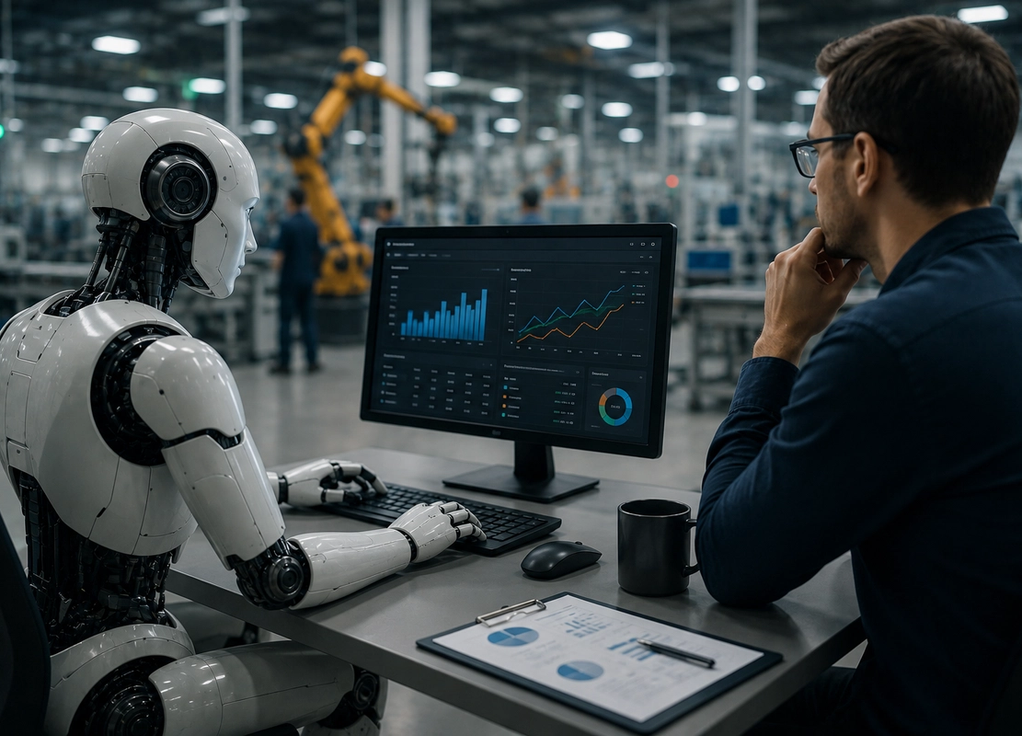
The most realistic outcome may not be humans versus robots, but humans working alongside increasingly intelligent systems.
AI will likely automate repetitive tasks, improve productivity, accelerate analysis, and reduce certain forms of labor.
At the same time, humans will continue contributing creativity, ethics, leadership, emotional understanding, and strategic thinking.
The relationship between technology and employment will probably remain dynamic rather than absolute.
Robots Are Changing Work — But Probably Not Ending It
The data suggests that automation will absolutely reshape the global workforce.
Some jobs will disappear. Others will evolve. Entirely new professions will emerge.
But the evidence does not strongly support the idea that robots will eliminate human work altogether anytime soon.
Instead, the future appears far more nuanced.
Technology will likely continue transforming industries while humans adapt alongside it, just as they have during previous technological revolutions.
The real challenge may not be whether robots take all jobs — but whether society can adapt quickly enough to the changes automation will bring.