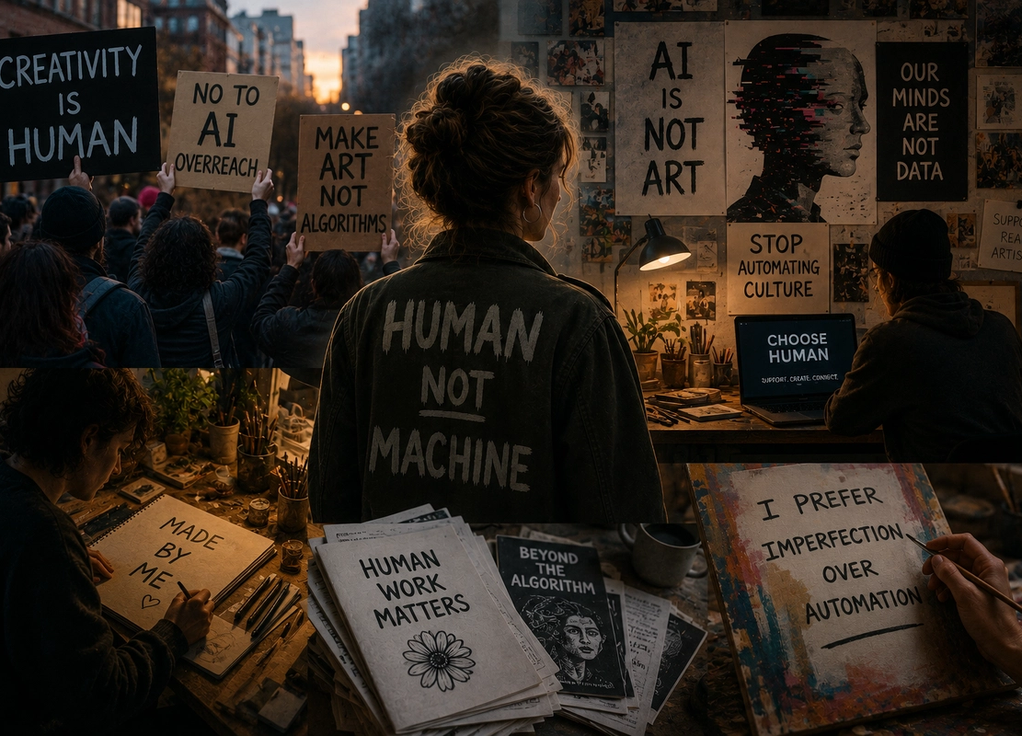
The Quiet Rise of the Anti-AI Movement
Sarah Lee
May 27, 2026
Artificial intelligence is advancing at an extraordinary speed.
AI systems now generate images, write essays, answer questions, automate customer service, create videos, and perform tasks that once seemed impossible for machines. Governments and tech companies continue investing billions into AI development, presenting it as the future of productivity, innovation, and economic growth.
But beneath the excitement surrounding artificial intelligence, another movement has quietly started growing.
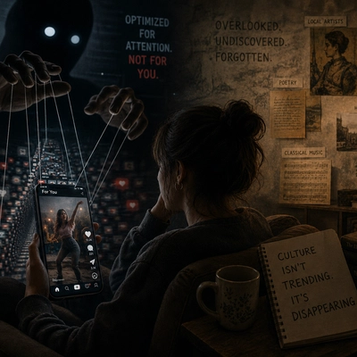
Across creative industries, schools, workplaces, online communities, and even parts of the tech world itself, more people are beginning to push back against the rapid expansion of AI. Some fear job displacement, others worry about privacy, misinformation, or the loss of human creativity. Many simply feel exhausted by how quickly technology is reshaping everyday life.
The anti-AI movement is not always loud or organized, but its presence is becoming increasingly noticeable.
Key Takeaways
- Growing numbers of people are becoming skeptical of AI expansion
- Concerns include jobs, creativity, privacy, and misinformation
- Many artists and workers fear being replaced or devalued
- Some people are rejecting AI tools in favor of human-made work
- The debate reflects broader anxiety about technology and modern life
1. Many Creative Workers Feel Threatened
One of the strongest sources of anti-AI sentiment comes from creative industries.
Writers, designers, musicians, photographers, actors, and illustrators increasingly worry that AI systems trained on human-created work could replace or devalue creative professions. Many artists argue that AI-generated content copies styles, ideas, and labor without proper permission or compensation.
This fear intensified as AI tools became capable of generating realistic art, music, scripts, and videos within seconds.
For many creative professionals, the issue is not only economic — it is also emotional. People worry that creativity itself is becoming treated as disposable or automated rather than deeply human.
2. People Are Growing Tired of AI Everywhere
AI is becoming integrated into nearly every major platform and service.
Search engines, smartphones, social media apps, productivity software, customer support systems, and even basic online tools increasingly include AI-generated features. While some users enjoy the convenience, others feel overwhelmed by how aggressively AI is being pushed into everyday digital life.
Many people simply do not want every interaction, search result, or creative process mediated by artificial intelligence.
This growing fatigue is partly why some users now actively seek human-made content, smaller online communities, or slower offline experiences as alternatives to increasingly automated environments.
3. Misinformation and Deepfakes Increased Public Fear
As AI-generated images, audio, and videos become more realistic, concerns about misinformation are growing rapidly.
Deepfake technology can now imitate voices, faces, and public figures with alarming accuracy, making it harder for people to distinguish real content from fabricated material. Experts worry this could damage trust in journalism, elections, public communication, and even personal relationships.
The problem is not only that fake content exists — it is that AI makes creating and spreading it dramatically easier and cheaper than before.
This has led many people to question whether society is prepared for the speed at which AI-generated media is evolving.
4. Workers Fear Economic Disruption
Many people supporting anti-AI ideas are motivated by economic anxiety rather than hatred of technology itself.
Automation has always changed labor markets, but AI threatens to affect both manual and white-collar professions simultaneously. Writers, customer support workers, translators, coders, teachers, analysts, and many others now face uncertainty about how much of their work could eventually become automated.
Even people who use AI tools often worry about long-term consequences for employment and financial stability.
The concern is not necessarily that all jobs will disappear overnight, but that workers may lose bargaining power and security as companies prioritize automation and cost reduction.
5. Some People Simply Miss Human Interaction
Part of the anti-AI movement reflects a broader emotional reaction against digital life becoming increasingly artificial.
People already spend enormous amounts of time interacting through screens, algorithms, and automated systems. As AI becomes more integrated into communication, entertainment, and work, some individuals feel a growing desire for experiences that feel genuinely human and emotionally authentic.
This is one reason labels like “human-made,” “handcrafted,” or “written by a real person” are starting to carry new cultural value.
In an increasingly automated world, authenticity itself may become more meaningful.
Even Some Tech Experts Are Warning About AI
Interestingly, concerns about AI are not limited to outsiders or people unfamiliar with technology.
Some researchers, engineers, and former tech executives have publicly warned about the risks associated with rapid AI development. Concerns range from misinformation and labor disruption to surveillance, bias, and the concentration of power among large tech companies.
While opinions differ widely, even many AI supporters acknowledge that society may not yet fully understand the long-term consequences of these systems.
The debate is becoming less about whether AI will change the world and more about how much control humans will retain over that change.
The Pushback Is Often Quiet Rather Than Extreme
Most people skeptical of AI are not rejecting technology entirely.
Instead, the anti-AI movement often appears through smaller forms of resistance. Some artists refuse AI-generated tools, schools restrict AI-assisted work, companies advertise human-created products, and users intentionally seek more offline experiences or smaller digital spaces.
This resistance is often less about fear of machines and more about protecting human creativity, privacy, work, and emotional connection.
People are questioning whether faster automation always leads to a better quality of life.
AI Is Becoming a Cultural Debate, Not Just a Technical One
Artificial intelligence is no longer only a technology story.
The rise of AI is now shaping conversations about ethics, identity, labor, creativity, trust, and what people actually value in human life. The anti-AI movement reflects growing discomfort with how quickly digital systems are replacing activities once considered deeply personal or uniquely human.
Technology changes society, but society also pushes back when change feels too fast or too disruptive.
The Future May Depend on Balance
AI will likely continue expanding into daily life regardless of criticism.
The technology is too powerful, profitable, and strategically important for governments and corporations to slow down easily. But the growing anti-AI movement suggests that many people still want limits, transparency, and stronger protection for human work and human interaction.
The future may not become entirely anti-AI or fully AI-driven.
Instead, society may spend the coming years trying to find a balance between technological progress and preserving the parts of human life people still do not want machines to replace.