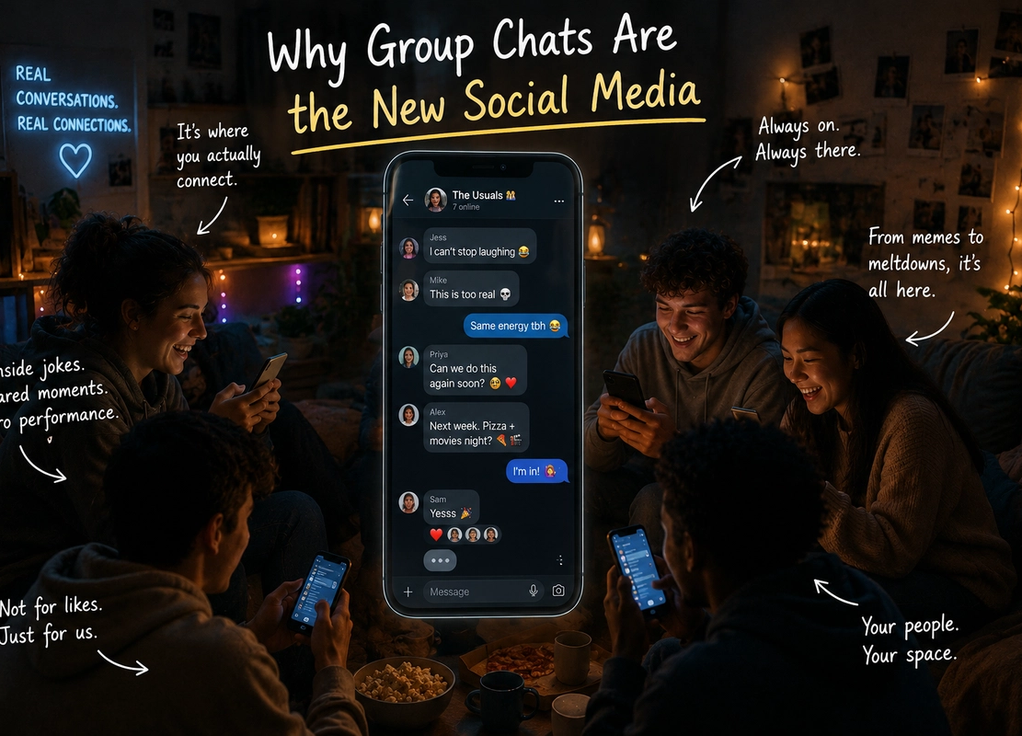
Why Group Chats Are the New Social Media
Sarah Lee
May 27, 2026
For many people, the internet no longer feels centered around public posting.
Instead of sharing constantly on open social media platforms, more users are spending their time inside private group chats, close-friends stories, Discord servers, and messaging apps. Conversations that once happened publicly on Facebook timelines or Twitter feeds are increasingly moving into smaller, more personal digital spaces.
This shift reflects a major change in how people interact online.
While traditional social media focused heavily on broadcasting content to large audiences, group chats feel more private, relaxed, and emotionally authentic. In many ways, they are becoming the digital spaces where real social interaction now happens most actively.
Key Takeaways
- Many online interactions are shifting from public feeds to private chats
- Group chats often feel more personal and less performative
- Younger generations increasingly prefer smaller digital communities
- Messaging apps are replacing traditional social media engagement
- Private online spaces offer stronger feelings of connection and control
1. People Are Tired of Performing Online
One major reason group chats became so popular is because public social media often feels exhausting.
Posting online can feel highly performative, with people carefully managing how they appear through photos, opinions, captions, and curated content. Many users now feel pressure to look successful, funny, attractive, or constantly interesting whenever they post publicly.
Group chats remove much of that pressure.
Inside smaller private spaces, people usually communicate more casually and naturally without worrying as much about algorithms, strangers, or public judgment. Conversations feel less like performances and more like genuine interaction.
2. Private Spaces Feel More Authentic
Traditional social media platforms became increasingly crowded with advertisements, influencers, viral content, and algorithm-driven feeds.
As a result, many users started feeling disconnected from the original social aspect of social media itself. Group chats, on the other hand, often recreate smaller and more intimate forms of communication where people can joke freely, share random thoughts, and interact more honestly.
For many people, group chats now feel closer to real friendship than scrolling through endless public content.
The internet became so public that privacy itself started feeling refreshing again.
3. Messaging Apps Became the Center of Social Life
Apps like WhatsApp, iMessage, Telegram, Discord, Snapchat, and Messenger increasingly function as social hubs rather than simple texting platforms.
People organize plans, share memes, discuss current events, send voice notes, and maintain daily friendships primarily through group conversations. Some group chats remain active constantly, becoming almost like digital living rooms where interaction continues throughout the day.
This shift changed how people experience online connection.
Instead of passively consuming content from strangers or influencers, many users now spend more time interacting directly with smaller social circles.
4. Younger Generations Prefer Smaller Communities
Many younger users are moving away from large public platforms toward smaller and more controlled digital spaces.
Public social media can feel overwhelming because everything becomes visible, permanent, and open to judgment from large audiences. Group chats offer more privacy, emotional safety, and control over who participates in conversations.
This preference reflects a broader cultural shift online.
People increasingly value intimacy and familiarity over maximum visibility and public attention. Smaller communities often feel emotionally more comfortable than broadcasting thoughts to hundreds or thousands of followers.
5. Group Chats Create Stronger Everyday Connection
One reason group chats became so important is because they allow constant low-pressure interaction.
Friends can send jokes, updates, reactions, photos, or random observations without needing formal conversations or carefully planned communication. This ongoing digital presence helps people feel socially connected even during busy or physically distant periods.
In many ways, group chats replicate casual social interaction that naturally happens in everyday life.
They create a sense of shared space and continuous connection that traditional social media feeds often fail to provide.
Public Social Media Is Becoming More About Entertainment
Interestingly, many platforms once designed for social interaction now function more like entertainment apps.
TikTok, Instagram, and X increasingly prioritize viral content, influencers, recommended videos, and algorithmic discovery rather than direct communication between friends. People often open these apps to consume content rather than actively interact socially.
Meanwhile, actual conversations are happening elsewhere.
This separation partly explains why messaging platforms are becoming more central to modern social life while traditional social feeds feel increasingly impersonal.
Group Chats Also Have Downsides
Despite their benefits, group chats can also create stress and social pressure.
Constant notifications, endless conversations, inside jokes, and expectations for responsiveness can become emotionally draining. Some people also feel overwhelmed trying to keep up with multiple active chats simultaneously.
Digital closeness can sometimes create new forms of exhaustion rather than reducing them completely.
Still, many users prefer these smaller social environments because they generally feel more personal and emotionally manageable than highly public online spaces.
The Internet Is Becoming More Private Again
For years, social media encouraged people to share more publicly and constantly.
Now, many users seem to be moving in the opposite direction by prioritizing smaller communities, private communication, and controlled digital spaces. This shift reflects changing attitudes toward privacy, authenticity, and online identity.
People still want connection — they just increasingly prefer it in environments that feel less performative and less exposed.
Group Chats Became the Real Social Networks
The rise of group chats reveals something important about how online behavior is evolving.
People are growing tired of constantly broadcasting themselves publicly while algorithms dominate traditional social media experiences. Instead, they are seeking smaller spaces where interaction feels more natural, personal, and emotionally genuine.
In many ways, group chats succeeded because they brought back something early social media originally promised: real connection between people.
And for many users today, that connection matters far more than public visibility ever did.